FINGERS UP
A Short Film by Shana Berger
When the bully next door tells 8-year-old Wendy she has ‘internal damnation’, she goes on a middle-finger-flipping spree around her neighborhood and proves what it really means to be a “good girl”.
Synopsis
Midwest suburbia. 1988. “Jesus!” Wendy cries out as she falls down on the Fieckert’s neatly trimmed grass. Clive Fiekert just tripped her. She rises to defend herself, but Clive tells her she’s going to go to hell for “internal damnation.” Mrs. Fieckert, comes out to intervene. But instead of punishing Clive she blames Wendy, threatening to tell her mom she’s been a “bad girl.”
Wendy’s mom, Molly, needs Mrs. Fieckert’s vote at the upcoming neighborhood meeting to overcome the dictatorial president of the neighborhood association, Tube-Sock Gerry. So when Wendy tries to tell her Mom what really happened, Molly encourages her to apologize to Clive and smooth things over. Wendy feels even worse, worrying that she does have “internal damnation” after all.
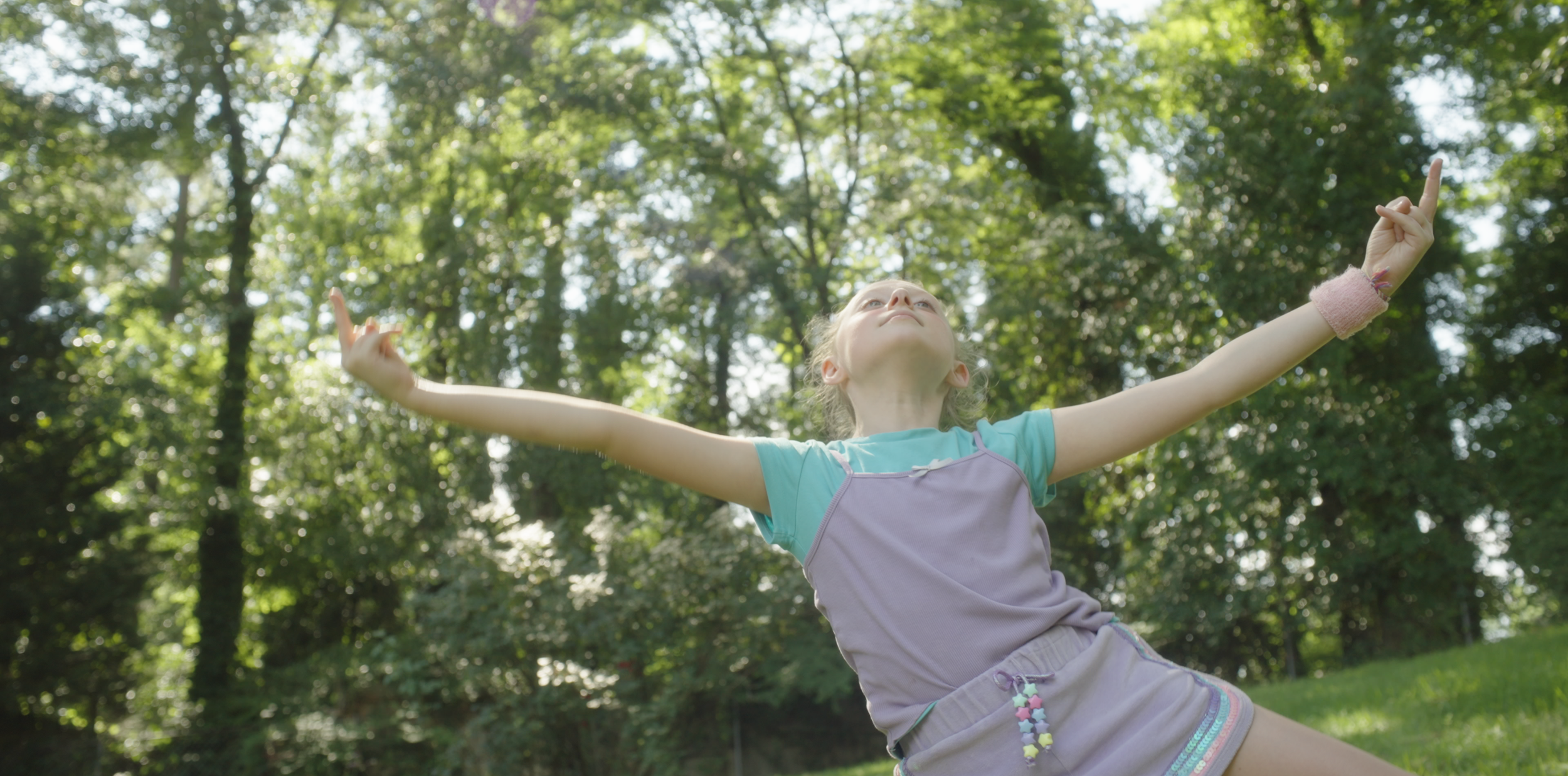
Relegated to watch TV, Wendy happens on a VHS tape of “On Golden Pond.” Her Dad, Marty, tries to protect her innocent eyes from the sight of Katherine Hepburn flipping the bird. But Wendy’s curiosity can’t be constrained and she’s soon practicing this magnificent rebellion in the backyard.
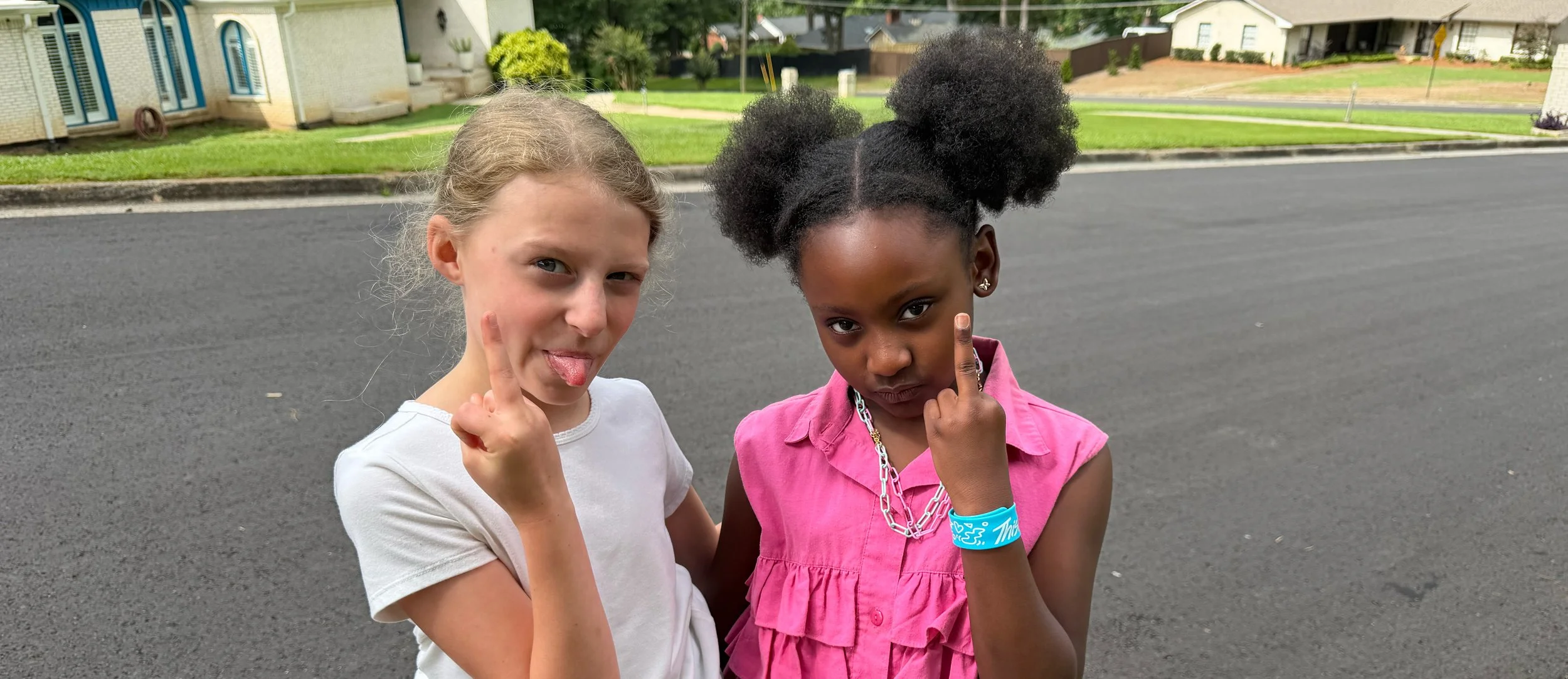
Joined by her best friend, Dana, the two girls set about their suburban neighborhood flipping up their middle fingers with unrestrained glee. But when they accidentally flip off Tube-sock Gerry, they end up in a wild chase that culminates back in the Fieckert’s driveway. Wendy finally confronts Clive, and Mrs Fieckert reveals she saw Clive trip Wendy on purpose, but condoned it because of her own tragic wounds. When Molly must choose between standing up for her daughter and trying to please other people, Wendy learns her true value, and that sometimes being bad is really, really good.
Writer/Director Statement
How do little boys get socialized to believe they can tell others what to do, while little girls get socialized to believe they have to do what they’re told?
This is the question I ask myself when reflecting on my 1980’s upbringing in the American Midwest, where I didn’t feel that I could say no to my (just a little boy) abuser, and instead of being protected, healed, or vindicated – I was shamed by his mother, who witnessed the abuse. In response to the shame I carried from that young age, what he did to me sat in silence for many years – even long after I had gained the knowledge of what was really right and wrong, and learned how to be a fierce and outspoken ally for myself and others.
This story is a fantasy (weaving together some other fun autobiographical elements from my childhood) about what could have happened – if my loving, trying-their-best parents had found out what really happened to me, if I had been able to stand up to my abuser, if my wild family had been able to carve out a little more room to be ourselves without facing judgment and isolation from the conservative community we were outsiders in.
It is my great hope that this film will turn my individual trauma (the kind that has been experienced by so many others) into collective healing. That’s what I think art can do … those magical moments when, as an audience, our pain can evaporate into laughter, we find more understanding even for the villains of the story, and we feel – hopefully, like Wendy – a little freer to be true to ourselves in a world that often tells us not to.